01
Frontend Pipelines
Server-first rendering pipelines built on the App Router. Streamed payloads, strict component boundaries, and zero client-side waterfalls.
- React 19
- Next.js App Router
- Tailwind CSS
- RSC
Median LCP 0.9s across audited deployments
// Enterprise software engineering
Codetier Systems designs and delivers high-throughput web platforms and zero-bloat native desktop terminals. Fixed architecture, typed contracts, sovereign handover.
Three layers. Each selected because it removes an entire class of failure from the system, not because it trends well.
Server-first rendering pipelines built on the App Router. Streamed payloads, strict component boundaries, and zero client-side waterfalls.
Median LCP 0.9s across audited deployments
Zero-bloat cross-platform desktop clients compiled to native binaries. Rust core, system webview, offline by default.
Shipped installers under 8 MB — Windows, macOS, Linux
Deterministic state machines on the client, normalized persistence on the edge. Every mutation is typed, traced, and reversible.
Row-level policies enforced at the database boundary
We engineer vertically integrated systems. From memory-safe database connection pools at the metal, through observable network telemetry, up to strict frontend runtimes—every layer is monitored, typed, and engineered for zero degradation.
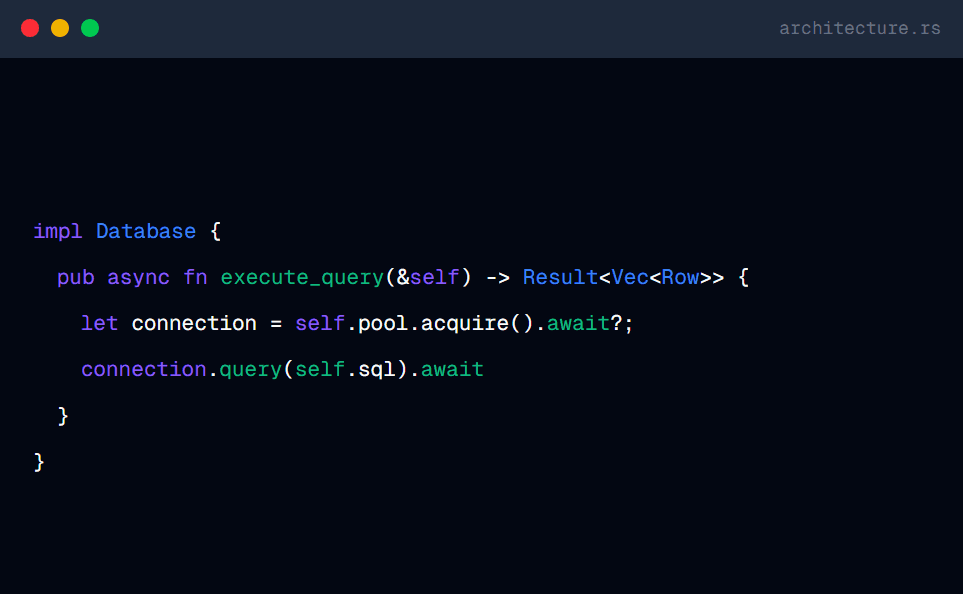
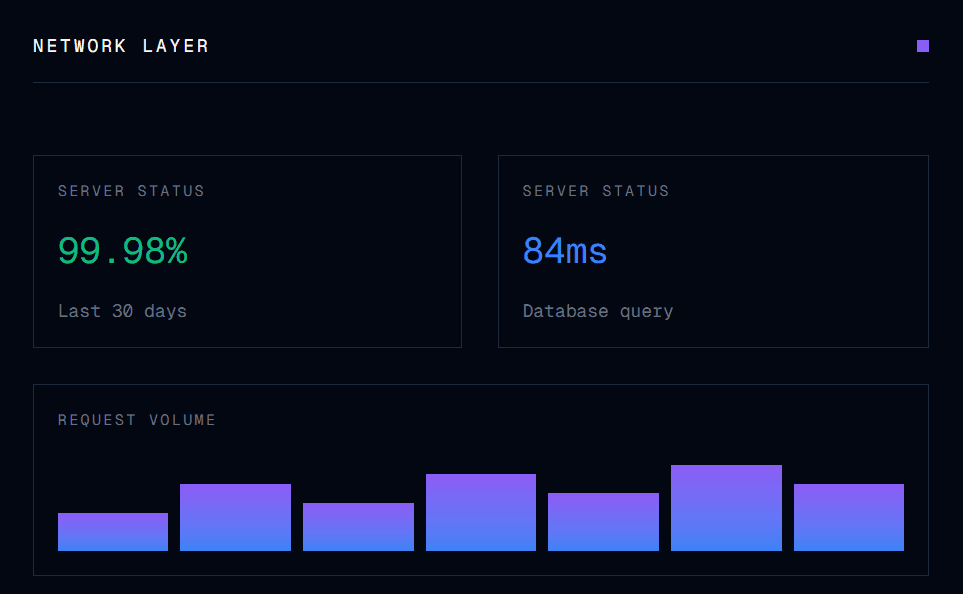
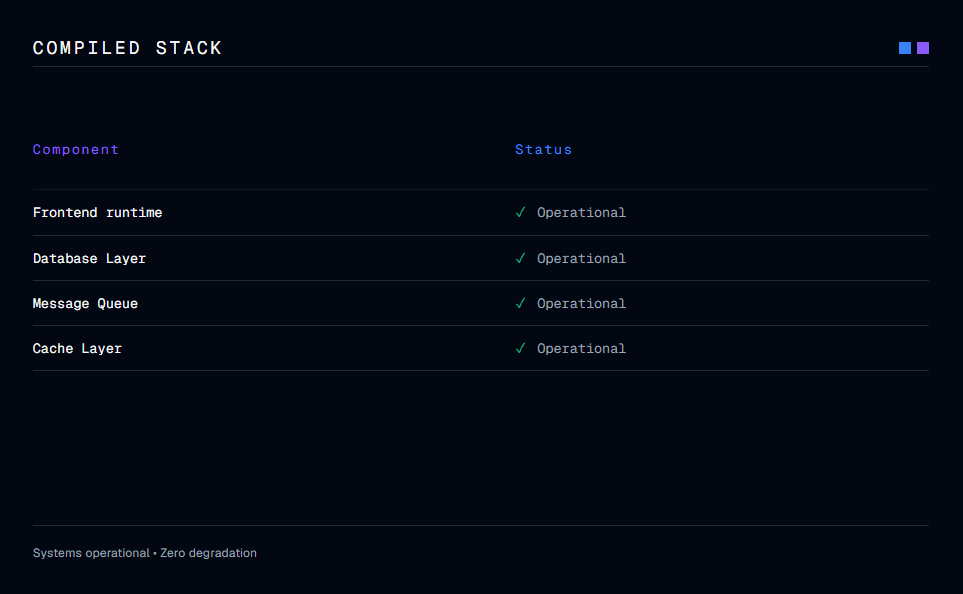
Two systems, two entirely different failure domains. Both delivered as sovereign infrastructure the client fully controls.
High-Throughput Industrial B2B Marketplace
A procurement network connecting industrial suppliers to enterprise buyers, handling continuous RFQ traffic with catalogues in the hundreds of thousands of SKUs.
Technical challenge
Native Desktop Invoice Terminal
An offline-first quotation and invoicing terminal for field operations. Native binary, local SQLite ledger, deterministic sync when connectivity returns.
Technical challenge
Four phases, executed in order, with no phase compressed to hit a demo date. This sequence is the product.
We read the system before we touch it. Data flow, boundaries, latency budgets, and the failure modes nobody documented. Output: a written verdict, not a sales deck.
Schemas, module boundaries, state ownership and deployment topology are settled on paper first. Every interface is decided before the first line of production code exists.
Strict typing end to end, no unowned state, no speculative abstractions. Every merge is reviewed against the blueprint — deviation requires an amendment, not a shortcut.
You own the repository, the pipeline, the database and the signing keys. We hand over an operable system with runbooks — not a dependency on us.
One accountable engineer on the architecture. No layered account management, no handoff to an unnamed delivery pool.

Cairo · Remote · GMT+2
Lead Engineer
A foundation in Business Information Systems means the architecture starts from the operational reality of the business — procurement cycles, approval chains, margin calculations — rather than from a framework preference.
That foundation was formalised through an M.Sc. in Software Engineering at Cairo University, with work concentrated on distributed system correctness and the performance characteristics of native application shells.
The result is a narrow practice: high-throughput B2B web platforms and native desktop terminals, engineered to be handed over and operated by the client independently.
Every engagement opens with a written systems brief — throughput targets, failure budgets, and handover terms defined before a single line is committed.

